
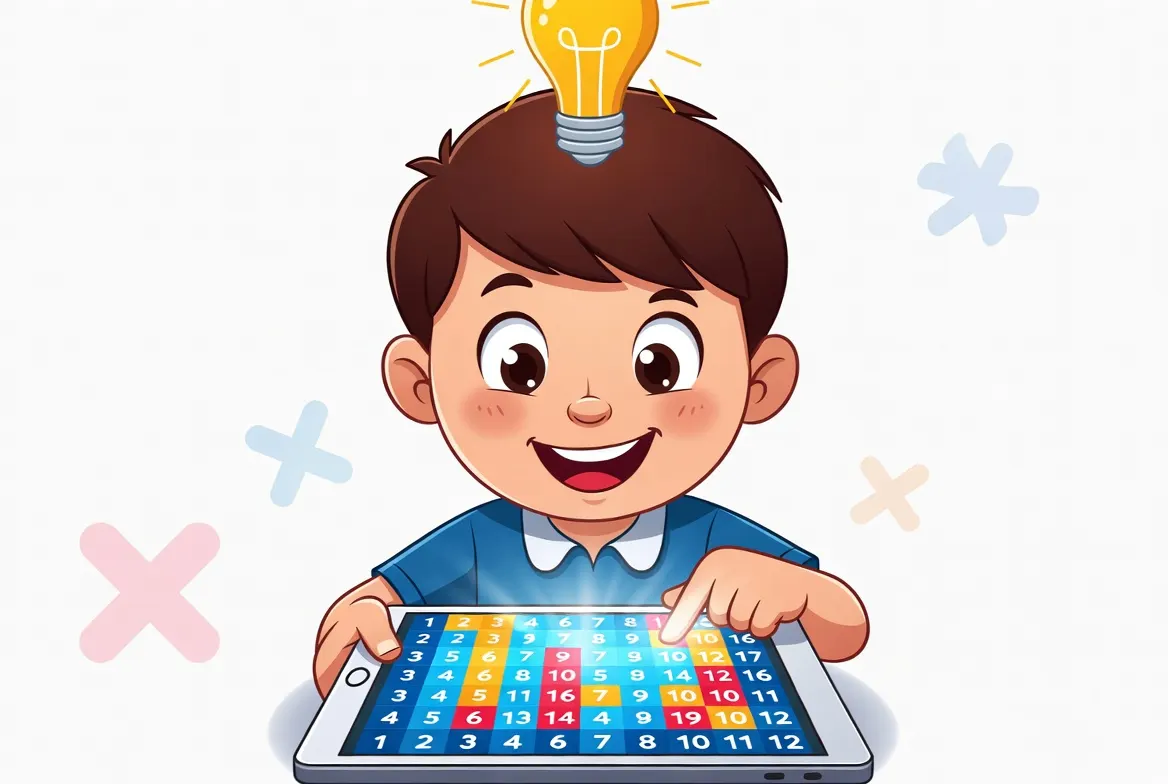
You sit at the kitchen table again. Your child stares at the 7 times table worksheet with that familiar frustrated look. They knew most of these facts yesterday, but today many have disappeared. Your heart sinks a little because you want math to feel easier for them, not harder.
Take a deep breath. You are not alone in this struggle. Thousands of parents feel the same way every single day. The good news is that you can teach times tables so your child actually remembers them long-term. Real, lasting memory is possible with the right approach.
At TeachKidsTimesTables.com, this complete guide shares exactly what works based on real experience teaching kids ages 6 to 10.
1. Why Long-Term Times Tables Memory Matters So Much
Multiplication facts are the building blocks for almost everything else in math. When your child has to pause and count on their fingers for basic facts, they lose focus on the bigger problem.
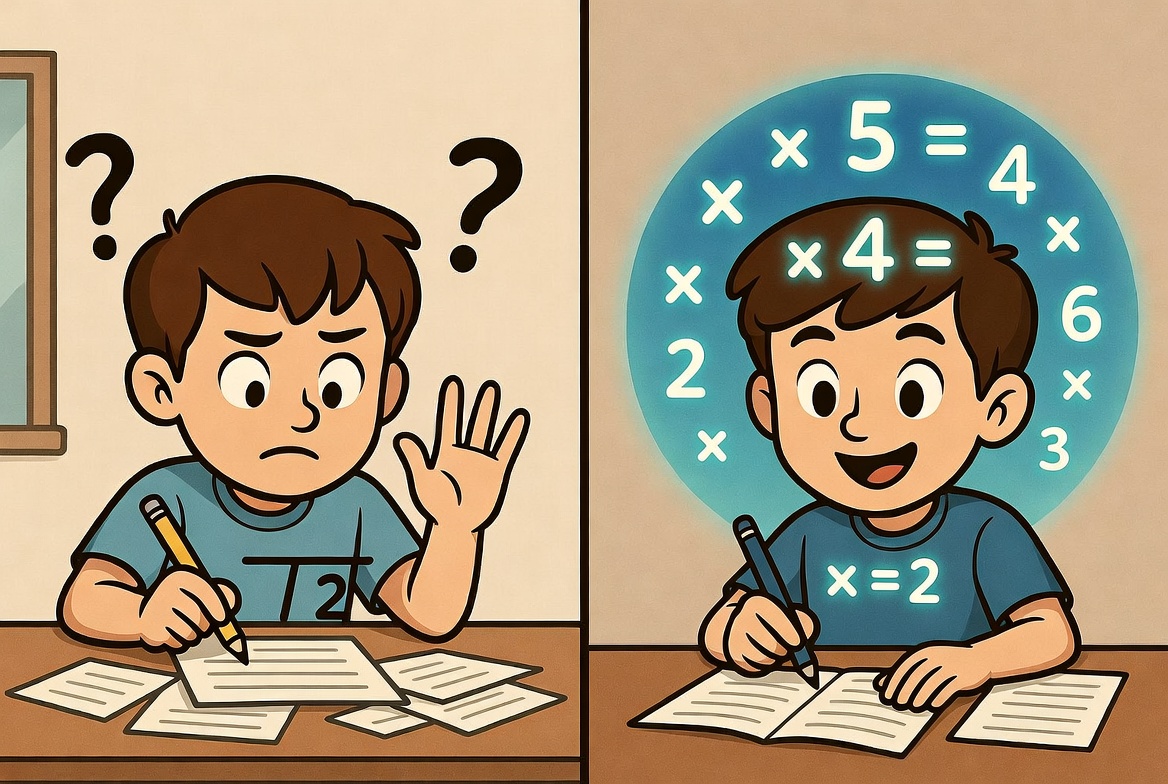
Long division becomes painful. Fractions feel confusing. Word problems take forever. But when facts live comfortably in long-term memory, your child gains speed and confidence. They can focus on understanding instead of basic recall.
This skill follows them through school and into real life. Strong times tables knowledge boosts overall math confidence and reduces homework battles at home.
💡 Practical tip: When your child pauses to count on fingers during word problems, times tables gaps are often the hidden reason. Moving facts into long-term memory removes this bottleneck and frees your child to focus on actually solving the problem.
2. How Children Actually Form Long-Term Math Memories
Kids' brains work differently than adult brains. They need connection, emotion, and variety to move facts from short-term to long-term storage.
Rote memorization creates weak memories that fade quickly. Multi-sensory, meaningful practice builds strong pathways that last for years. Understanding comes first, then smart repetition.
This explains why traditional flashcards and timed drills often fail. They create stress, which actually blocks good memory formation. Your child needs methods that feel safe and fun.
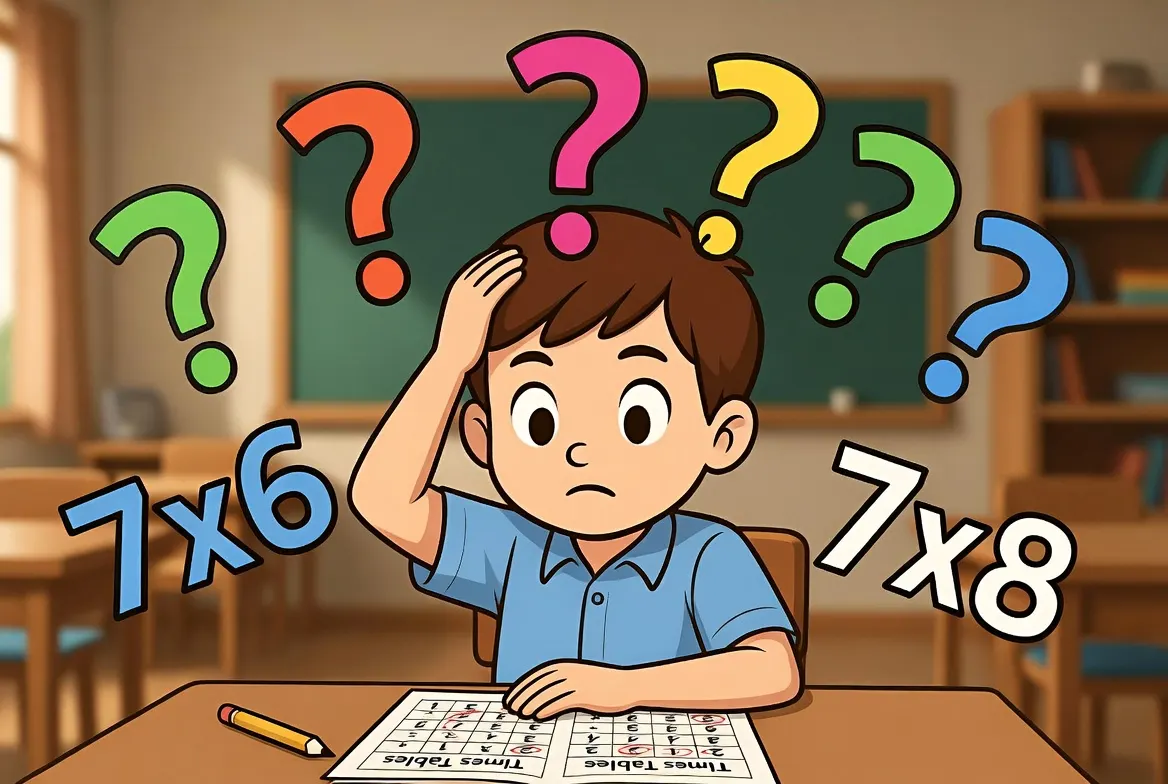
💡 Practical tip: If your child shows signs of stress during practice, stop immediately and switch to a game or story-based activity. Anxiety actively blocks memory formation, so a calm and positive environment is essential for learning that truly sticks.
3. The Smartest Order to Teach Times Tables for Better Retention
The sequence you choose matters more than most parents realize. Teaching in a logical order helps your child see connections instead of learning each table in isolation.
Start with these for quick wins and confidence:
- 2s, 5s, and 10s first
- Then 4s, 3s, and 6s, since they build on the 2s and 5s
- Next 8s, 9s, and 11s, now that number sense is strong
- Finish with 7s and 12s, the trickiest two
This connected approach makes learning feel easier. Your child builds on what they already know, which strengthens long-term memory naturally.
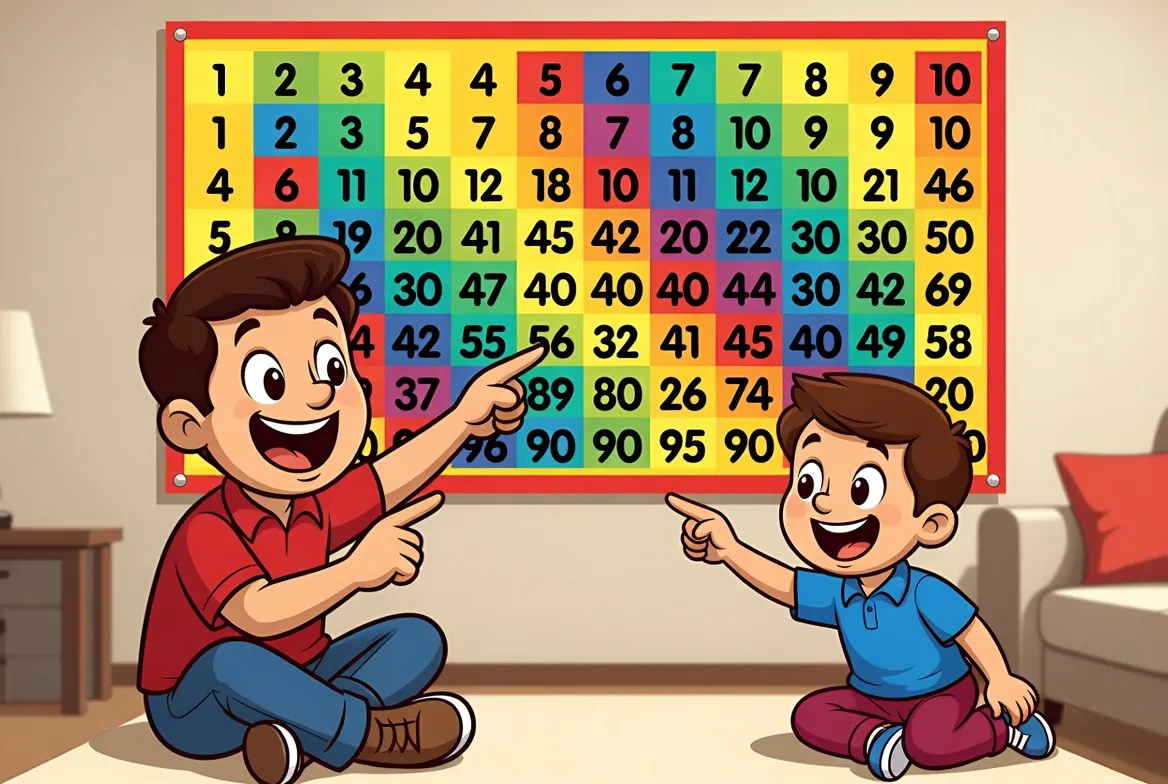
💡 Practical tip: Do not rush to the next table until your child can recall the current one accurately in random order. Rushing creates shaky foundations that slow down everything that comes after.
4. Proven Strategies That Build Lasting Times Tables Memory
Use patterns everywhere you can. The 9 times table digits always add to 9 from 9×1 through 9×10. The 11 times table has a simple repeating pattern. Point these out and watch your child light up with understanding.
Try multi-sensory activities. Let them trace facts in sand, jump rope while skip counting, or build arrays with blocks. The more senses involved, the stronger the memory becomes.
Keep practice sessions short. Ten focused minutes every day works far better than one long exhausting session. Your child stays motivated and their brain has time to process overnight.
Use spaced repetition. Review new facts again tomorrow, then in a few days, then after a week. This science-backed method moves information into long-term memory efficiently.
Teach the commutative property early. Once they know 6 times 7 equals 42, they instantly know 7 times 6 equals 42 too. This simple idea cuts the work almost in half.
Create silly stories for tricky facts. Make up fun mnemonics your child helps invent. Funny visual stories become incredibly sticky in young brains.
Bring times tables into real life. Count cookies for plates, calculate minutes until dinner, or figure out total toys in groups. Real-world use strengthens memory beautifully.
Celebrate effort and progress, not just perfect scores. This builds the growth mindset that supports all future learning.

💡 Practical tip: Spaced repetition is the single most powerful tool for long-term memory. Review a new fact the next day, then in three days, then after a week. This pattern alone can cut the time to mastery in half compared to daily massed practice.
5. Practical Tips for Parents – Your Easy Day-by-Day Plan
Here is a simple, realistic plan you can start using this week.
- Pick one times table to focus on for 7 to 10 days.
- Begin every session with a quick warm-up of facts they already know.
- Spend the first few minutes building understanding with real objects or drawings.
- Use our colorful interactive multiplication grid at /learn/ to discover patterns together.
- Practice for just 8 to 12 minutes using our customizable quizzes at /practice/.

- Play one fun game from /games/ every single day.
- Have your child explain facts to you or a stuffed animal. Teaching others locks in memory.
- Create a visible progress chart using our free printables at /print/.
- Look for times tables moments during normal daily activities.
- End every session with a fact they know well so they finish feeling successful.
- Check the /dashboard/ together to celebrate small improvements.
- Mix activities: some days movement, some days drawing, some days games.
These short, consistent habits create big results over time without overwhelming your busy schedule.
💡 Practical tip: Eight focused minutes every day beats one hour on the weekend. Short daily practice works with how young brains consolidate memory overnight during sleep.
Why This Approach Works
Short daily sessions that start with understanding, rather than straight memorization, tend to turn crying and frustration into kids proudly reciting facts on their own. The star ratings in our /practice/ quizzes help here too, since kids can see themselves getting better each week instead of just guessing how they are doing.
Stronger fact recall tends to show up in word problems and fractions too, since kids no longer have to stop and calculate a basic fact before they can tackle the harder question in front of them.
💡 Practical tip: Share small wins with your child by telling them what their teacher or another adult noticed about their progress. External recognition from trusted figures is incredibly motivating for children ages 6 to 10.
Try It Yourself With Our Free Tools
You do not need expensive workbooks or apps. Everything you need is right here and completely free.
Works on tablets, computers & phones • No sign-up needed • Everything on the site is free
You Are Already Doing the Most Important Thing
Teaching times tables so kids remember them long-term takes patience, but you do not need to be perfect. You just need consistent, kind methods that match how children learn best.
Your child can become one of those kids who knows their facts automatically. That confidence will help them through many years of school and beyond.
You have already taken a big step by reading this guide and looking for better ways. Keep going. Small daily improvements add up to huge success. Your child is lucky to have a parent who cares this much.
Come back to this article anytime you need a refresher. Try one new tip this week and notice the difference. We are always here to help at TeachKidsTimesTables.com.
Common Questions
How long does it usually take for a child to master all times tables long-term?
Most children need 3 to 6 months with consistent smart practice. Every child learns at their own pace and that is completely okay.
What should I do when my child keeps forgetting the same facts?
Focus extra time on those facts using different methods like stories, movement, and games. Short daily review works much better than long frustrating sessions.
Are timed tests helpful for building long-term memory?
Timed tests often create anxiety that hurts memory formation. Focus first on accuracy and understanding. Speed comes naturally afterward.
Will these methods work for a child with ADHD or attention challenges?
Yes. Short sessions, movement, variety, and games are especially helpful for kids who find it hard to sit still.
What is the best age to start teaching times tables?
Most children are ready around 7 or 8 years old. You can begin building foundations with skip counting as early as age 6.
Do I need to buy any special materials or apps?
No. Our completely free tools plus things you already have at home are all you need.
How can I tell when my child has truly mastered a times table?
They can recall facts quickly in random order, explain the meaning, and use them easily in word problems or real-life situations.