

You have probably wondered: “Should I start with the 2s? Or the 7s? Or maybe the 10s because they're easy?”
You are asking the right question. The order in which you teach times tables makes a huge difference in how quickly and how permanently your child learns them. Teach in the wrong order and your child struggles, gets frustrated, and forgets everything by summer. Teach in the smart order and everything clicks faster, feels easier, and sticks for years.
This complete guide shows you the exact best order to learn times tables, why it works so well, and how to teach each stage at home without stress.
1. Why This Topic Matters
Most parents and even some teachers start with whatever table comes next in the school book. That random approach is one of the biggest reasons kids struggle with multiplication. When facts are taught out of order, the brain has no foundation to build on. It is like trying to build a house starting with the roof instead of the foundation.
The right order follows how children's brains naturally develop number sense. It starts with the easiest patterns, builds confidence quickly, and then layers on harder facts using what your child already knows. The result? Faster progress, less frustration, and facts that actually stay in long-term memory.
💡 Practical tip: If your child is already struggling and feeling behind, go back to the 2s and 5s before anything else. Rebuilding a solid foundation always pays off faster than pushing forward on shaky ground.
2. The Traditional (and Painful) Way vs The Smart Way
Most schools still teach tables in numerical order: 1s, then 2s, then 3s, and so on. While this feels logical to adults, it is not the most effective for kids. Many children get stuck on the 6s, 7s, and 8s because they have not yet built strong enough foundations with the easier tables.
The smart order is different. It is based on how children actually learn patterns, doubles, and connections between numbers.
💡 Practical tip:You can follow the smart order at home even if your child's school uses the traditional sequence. The extra foundation you build makes school multiplication much easier too.
3. The Proven Best Order to Learn Times Tables
Here is the order that works best for almost every child ages 6–12:
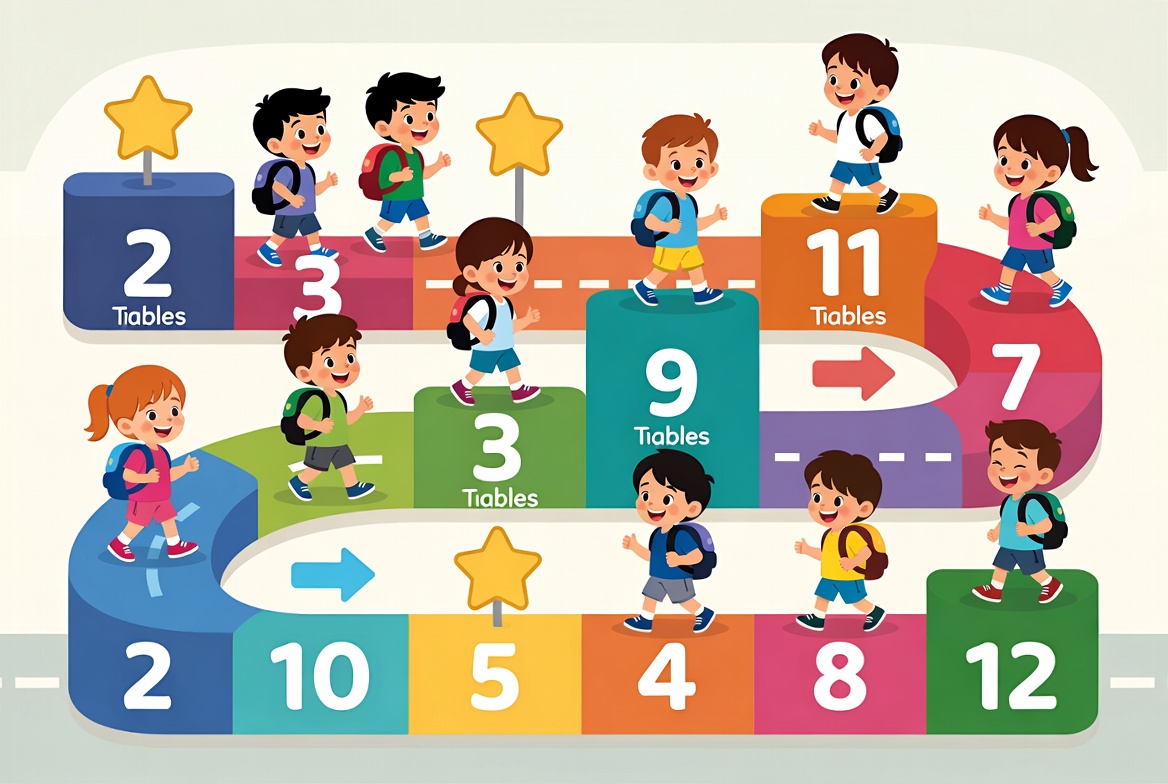
Stage 1: The Easiest Wins (2s, 5s & 10s)
These are the fastest to master and give your child an immediate confidence boost.
- 2s: Just double everything (skip counting by 2)
- 5s: Ends in 0 or 5, easy to see on a clock
- 10s: Just add a zero
Most kids can master these in 1–2 weeks with short daily practice.
Stage 2: Building on What They Already Know (4s, 3s & 6s)
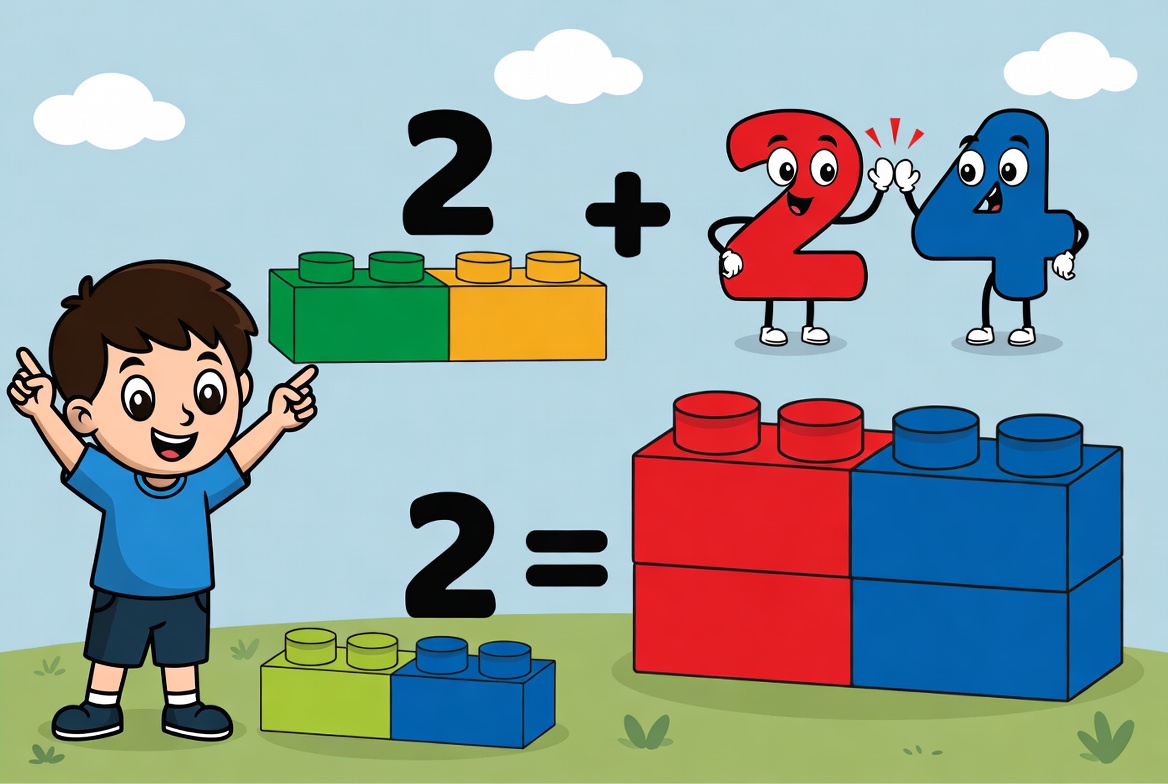
Once the 2s are solid, the 4s become easy because 4 × 3 is just double 2 × 3. The 3s and 6s also connect beautifully to the 2s and 5s your child already knows.
Stage 3: The “Tricky but Doable” Tables (8s, 9s & 11s)
By now your child has strong number sense. The 8s are just double the 4s. The 9s have wonderful finger tricks and patterns. The 11s are surprisingly simple once you show the pattern.
Stage 4: The Final Two (7s & 12s)
These are saved for last because they are the hardest. But by this point your child has so many strategies and so much confidence that even the 7s feel manageable.
💡 Practical tip: Do not rush to the next stage until your child can recall the current tables quickly and correctly 80% of the time. Solid foundations make every later stage feel surprisingly easy.
4. How to Teach Each Stage at Home (Practical Plan)
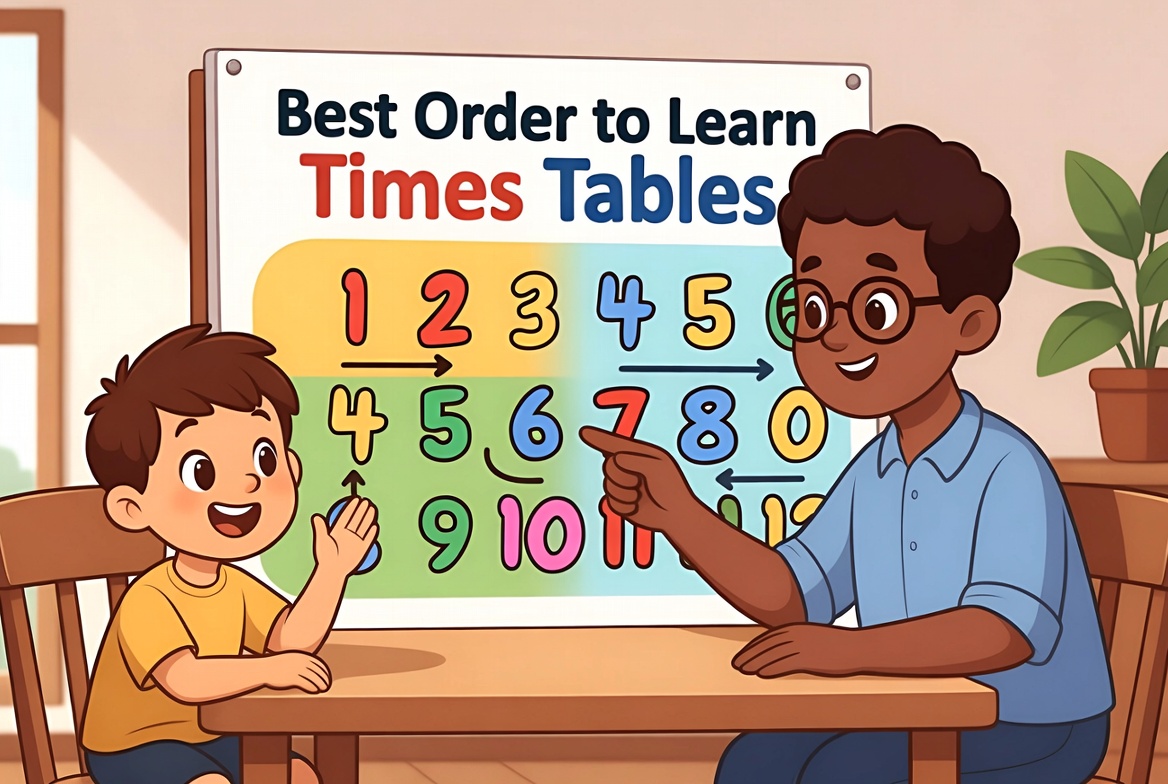
Week 1–2: 2s, 5s & 10s
- Sing skip-counting songs in the car
- Use our free /learn/ grid to color the patterns
- Play “I'm thinking of a number” games
- Celebrate every single win
Week 3–4: 4s, 3s & 6s
- Show how 4s = double the 2s using LEGO or drawings
- Use stories for the 3s (“3 little pigs times table”)
- Mix in quick review of the 2s, 5s and 10s every day
Week 5–6: 8s, 9s & 11s
- Teach the famous 9s finger trick (your child will feel like a magician)
- Show the 8s doubling pattern
- Use our /practice/ quizzes with star ratings for motivation
Week 7–8: 7s & 12s + Full Review
- Use memory stories for the 7s
- Play lots of mixed games from /games/
- Celebrate the huge milestone of “All Tables Mastered!”
💡 Practical tip: Keep every practice session under 12 minutes. Short and consistent beats long and sporadic every time. Even 8 minutes daily adds up to just under an hour per week without any overwhelm.
5. Practical Tips for Parents
- Never move to the next table until your child can recall the current one quickly and correctly 80% of the time
- Keep every practice session under 12 minutes
- Always start with a table your child already knows well
- Use the “teach me” method: let your child explain the facts to you
- Print a free multiplication chart from /print/ and put it on the fridge
- Track progress in the /dashboard/ so you can both see how far you have come
💡 Practical tip: Always start each new session with a table your child already knows confidently. This warm-up creates a positive, relaxed mood that makes the harder new facts much easier to absorb.
6. Why This Order Builds Lasting Confidence
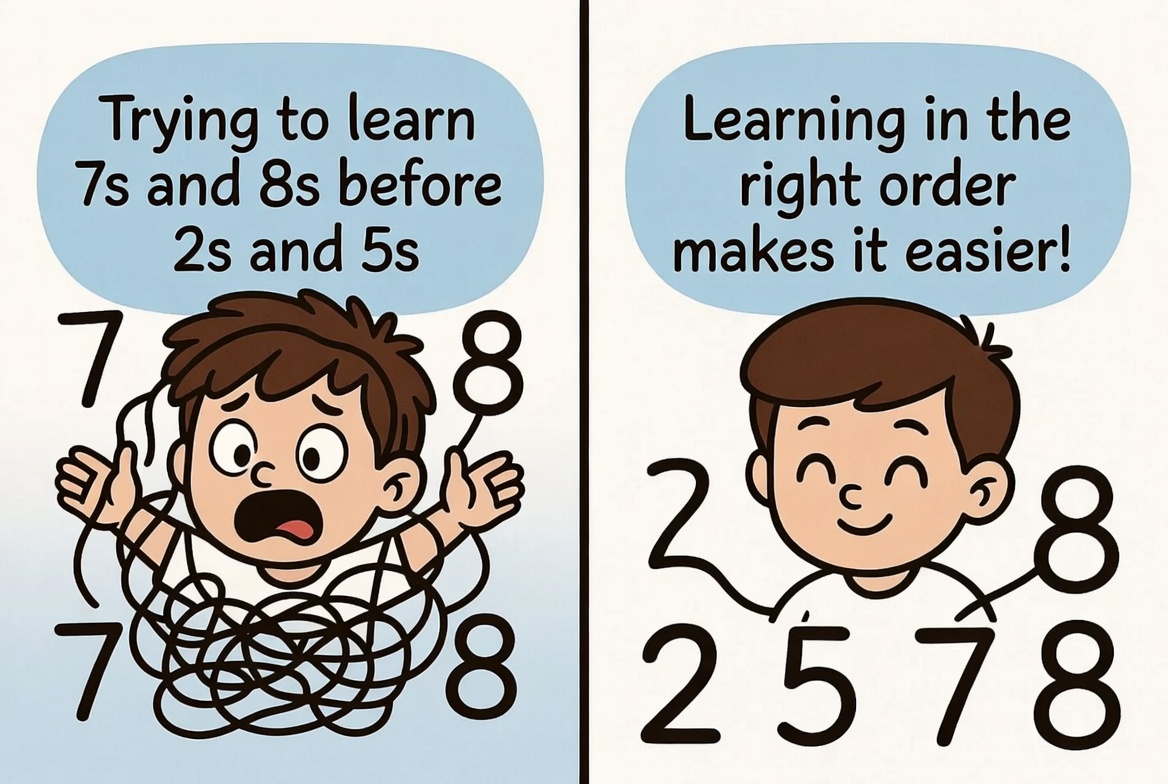
Kids who learn in the wrong order often spend months stuck on hard facts like the 7s before they have the easier tables to lean on. Teaching in this sequence instead lets each new table build on one your child already knows well, so confidence compounds instead of running out.
That connection is also why kids who master the order tend to help younger siblings or classmates with the easier tables once they have it down: the pattern makes sense to them, not just the individual facts.
💡 Practical tip: Share small wins with your child. Tell them what their teacher or another adult noticed about their progress. External recognition from trusted figures is incredibly motivating for children ages 6 to 10.
Try It Yourself Right Now
You do not need to guess the best order anymore. We have built everything you need, completely free.
Works on tablets, computers & phones • No sign-up needed • Everything on the site is free
The Right Order Makes All the Difference
The best order to learn times tables is not the order that feels most logical to adults. It is the order that builds confidence fast, uses patterns and connections, and respects how children's brains actually work. When you follow this sequence, your child will not just “get through” multiplication. They will truly own it for life.
You are giving your child such a beautiful gift by choosing to teach them in the smartest way possible. The confidence they gain from mastering their times tables the right way will stay with them for years.
Start today with the interactive grid at TeachKidsTimesTables.com/learn and watch the magic happen.
Common Questions
Is the order really that important?
Yes. Teaching in the wrong order is one of the top reasons kids struggle and forget. The right order makes everything easier and faster.
What if my child's school teaches in a different order?
You can still use the smart order at home. Many parents do this successfully. The extra practice and better foundation actually help them in school too.
How long should each stage take?
Most children need 1–3 weeks per stage depending on age and how much daily practice they get. Short, consistent sessions work much better than long cramming sessions.
Should I skip any tables?
No. Every table is important, but some are much easier when taught at the right time. Never skip, just teach in the best sequence.
What if my child is already stuck on the 7s?
Go back and strengthen the earlier tables first (especially 2s, 4s and 5s). Then come back to the 7s. You will be amazed how much easier they become.
Is there a printable version of this order?
Yes! Print a free multiplication chart at /print/ to use alongside this order.
My child gets bored easily. How do I keep them motivated?
Use the games at /games/, celebrate every small win, and let them choose which table to practice some days. The star rating system in /practice/ also makes it feel like a game.