
Quick answer: A free printable multiplication chart is a 1-12 grid showing every multiplication fact at a glance. Print one in color or black and white, hang it somewhere your child sees daily, and pair it with a short 5-minute practice routine. The chart alone will not teach memorization, but it removes the guesswork and anxiety while facts are still sinking in.
A printable multiplication chart is one of the oldest learning tools around, and it still works. There is nothing flashy about a grid of numbers on a page, but a well-placed chart quietly does a lot of the heavy lifting while your child is building up their multiplication facts.
This guide covers how to use a printable multiplication chart effectively at home: where to hang it, how to turn it into a quick daily habit, and how to eventually wean your child off it as facts move into long-term memory.
Everything here takes a single sheet of paper and a few minutes a day, no special equipment, subscriptions, or apps required.
1. Why a Multiplication Chart Printable Still Beats a Screen
A chart on paper does something an app cannot: it stays visible without being opened, tapped, or logged into. Kids see it while eating breakfast, walking past the fridge, or sitting down to do homework. That repeated, low-pressure exposure builds familiarity with number patterns long before a child can recite every fact from memory.
It also removes a common source of math anxiety. When a child gets stuck mid-problem, glancing at a chart to confirm an answer keeps momentum going instead of triggering a frustrated stop. Over time, as facts become automatic, the chart gets used less and less on its own.
💡 Practical tip: Print two copies: one for a binder or desk, and one for a high-traffic spot like the fridge. Having it in more than one place multiplies the number of casual glances your child gets each day.
2. Where to Hang the Chart for Maximum Use
Placement matters more than most parents expect. A chart filed away in a folder gets opened once a week at best. A chart taped to a spot your child already looks at multiple times a day gets dozens of free glances without anyone having to remember to practice.
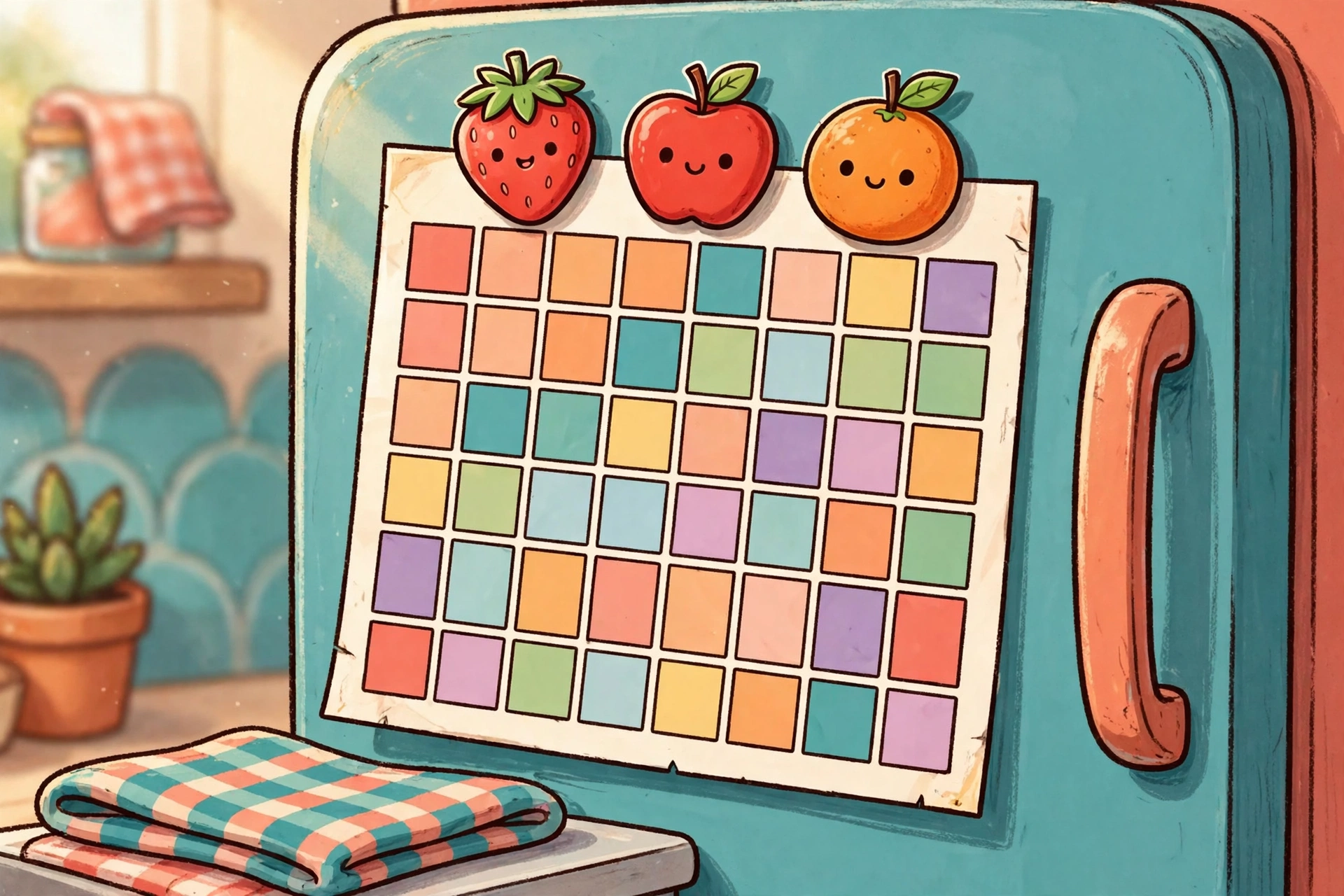
- The refrigerator, at a height your child can actually see without craning their neck
- Above or beside the homework desk
- Inside a bedroom closet door, where morning routines offer a few spare seconds
- Taped to the back of a car seat headrest for road trip glances
- Next to the bathroom mirror, where tooth-brushing time doubles as review time
💡 Practical tip:Move the chart to a new spot every few weeks. A fresh location catches a child's attention again, the same way rearranging furniture makes a room feel new.
3. A 5-Minute Daily Routine That Actually Sticks
A chart works best when it is part of a short, predictable routine rather than an occasional activity. Five minutes a day is enough to make real progress without turning math into a battle.

- Pick one row of the chart to focus on that day, starting with the 2s or the 5s
- Ask your child to read the row out loud once while pointing to each fact
- Cover the answers and quiz just that row
- Celebrate, then move on with the day
Once a row feels easy, retire it from the daily routine and add a new one. For a more structured version of this same idea, our interactive learning grid walks through every table with the same focused, one-at-a-time approach.
4. Turn Progress Into a Sticker Reward System
Kids respond well to visible progress. A simple sticker system built around the printed chart gives your child something to look forward to without turning practice into a bribery negotiation.
Print a second copy to use as a tracking sheet. Each time your child can recite an entire row from memory without looking, add a sticker next to that row on the tracking copy. Watching the stickers fill in row by row gives a visual sense of progress that a single pass or fail score never quite captures.
💡 Practical tip: Keep the reward small and immediate, a sticker rather than a toy or money. The goal is quick positive feedback, not a negotiation over prizes.
5. How to Read the Grid and Use Color Coding
A multiplication chart is a grid where the row number and column number multiply together to give the answer in that cell. It takes most kids a few tries to understand this layout, so it is worth walking through it together the first time rather than assuming it is obvious.
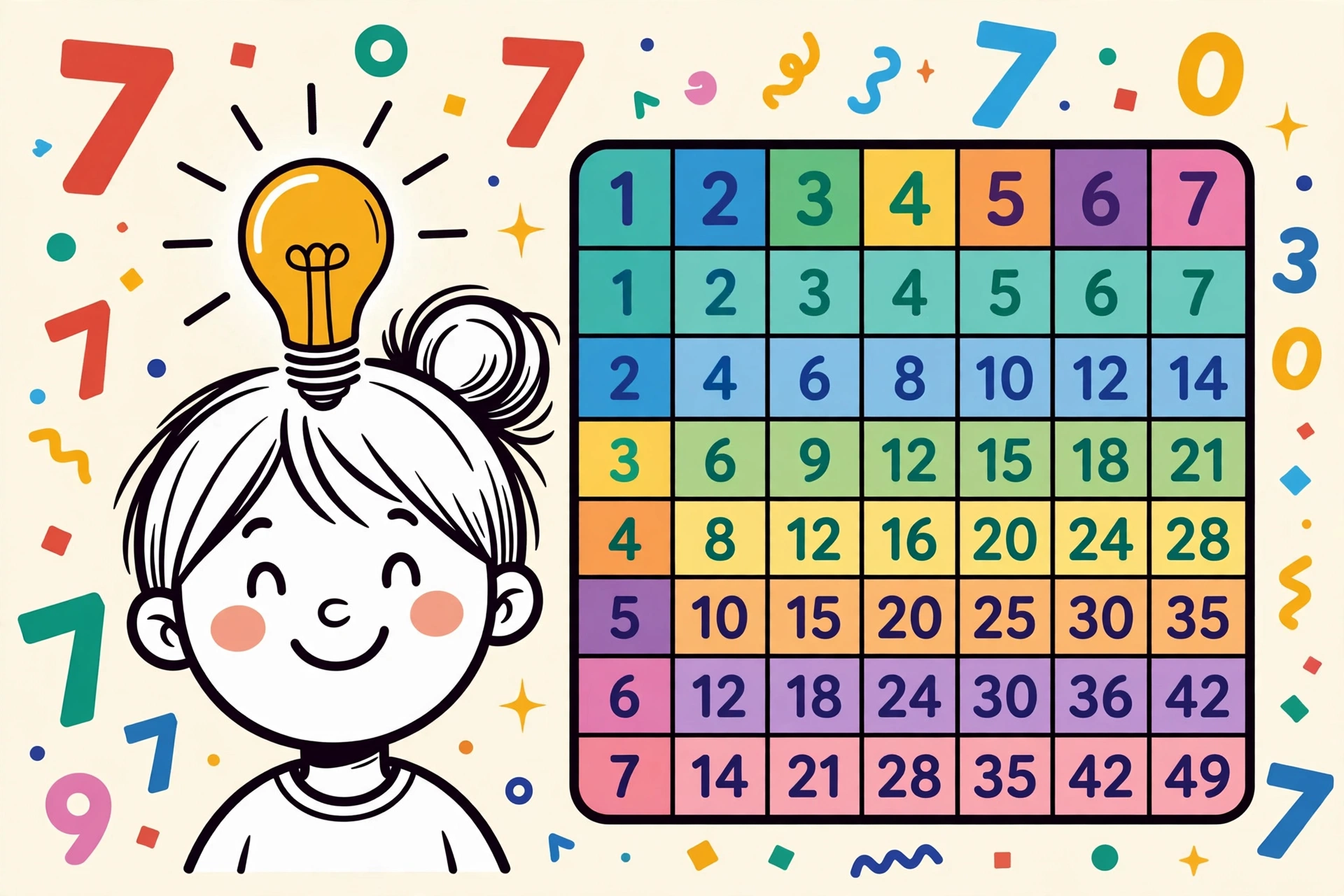
Color-coded charts, where each times table gets its own color, make this even easier to follow because a child can trace one color across the page instead of hunting through a wall of identical black numbers. Our free printable multiplication chart (1 to 12) uses this same color-coding approach, and you can explore individual tables like the 7 times table or the 9 times table to see the pattern for a single number up close.
💡 Practical tip: Show your child that the chart is symmetrical, 6 × 4 and 4 × 6 land in the same place on opposite sides of the diagonal. Seeing this cuts the number of facts to memorize nearly in half.
6. Storing and Organizing Your Printables
Once you start printing charts, worksheets, and tracking sheets, it helps to have one home for all of it. A simple binder with a few plastic sleeves keeps everything protected and easy to find, instead of loose pages scattered across the house.
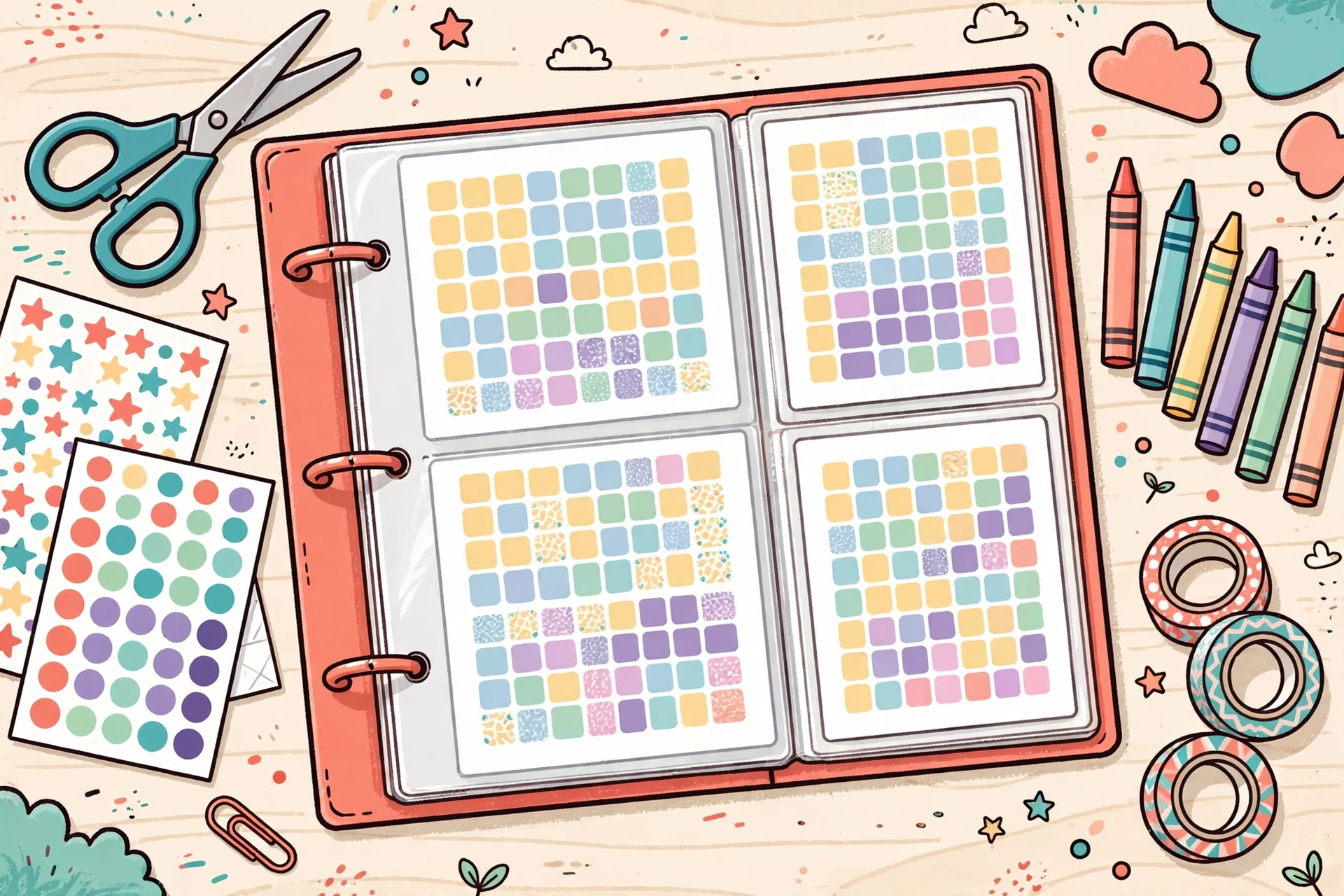
Our printables library has the full set of charts and worksheets in one place, so you can print a fresh batch whenever a page gets worn out or a sticker tracking sheet fills up. Slide a plastic sleeve over the active chart so your child can mark it up with a dry-erase marker and reuse it.
If worksheet time tends to end in frustration, our no-tears guide to multiplication worksheets covers how to pick the right level and keep sessions calm.
Browse all free printables →Common Questions About Multiplication Charts
Is a printable chart as effective as a learning app?
A printable chart and an app serve different purposes. The chart is a passive, always-visible reference, while an app like our practice quizzes gives active feedback on which facts still need work. Most families get the best results using both together.
How long does it take to memorize the whole chart?
With short daily practice, most children move from needing the chart constantly to rarely needing it within a few months. Progress depends heavily on consistency rather than the length of any single session.
What order should my child learn the rows in?
A proven sequence is 2/5/10, then 4/3/6, then 8/9/11, then 7/12. Our complete guide to the best order explains why this sequence works better than going in straight numerical order.
Does a black and white chart work as well as a color one?
Both work. A black and white chart is cheaper to print in bulk and fine for a quiz-style tracking sheet. A color-coded chart tends to be easier for younger children to scan quickly, since each table stands out as its own visual block.
Print Your Chart and Start Today
Everything on the site is free, including the printable chart, the practice quizzes, and the learning grid.
Works on tablets, computers & phones • No sign-up needed • Everything on the site is free
A Simple Tool, Used Consistently
A printable multiplication chart will not do the memorizing for your child, but placed somewhere they see it daily and paired with a short, consistent routine, it quietly removes a lot of friction from the learning process. The sticker system keeps motivation visible, and the chart itself becomes less necessary every week as facts move into long-term memory.
None of this requires a complicated system. A single printed page, a predictable spot on the wall, and a few consistent minutes a day go a long way toward making multiplication facts feel familiar instead of overwhelming.
Print your free chart today and pick one spot in the house where it will actually get seen.