
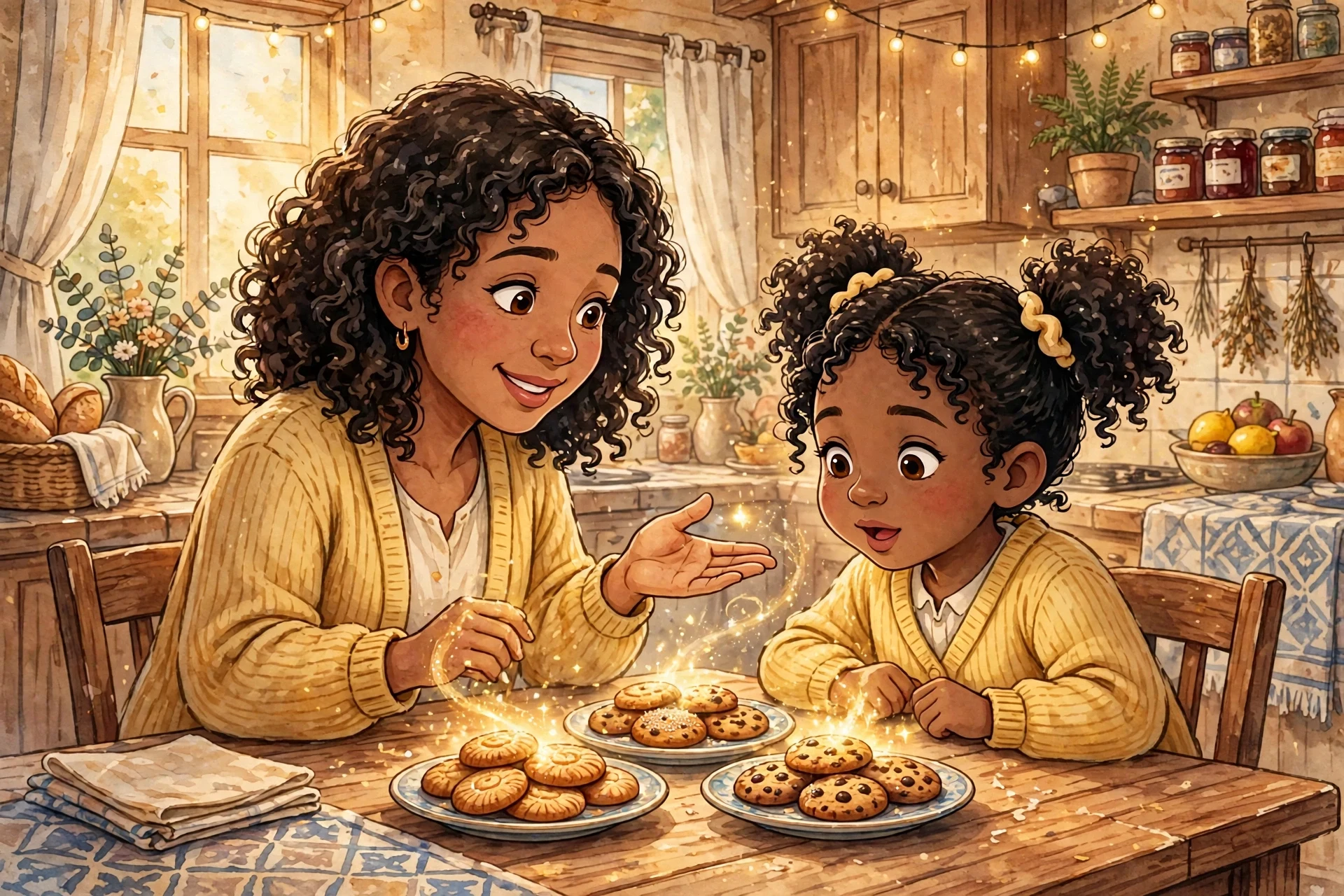
Quick answer: Multiplication is counting equal groups. Show 3 plates with 4 cookies on each before ever saying "3 times 4," and the symbol becomes a shortcut for something your child already understands, rather than an abstract new rule to memorize from scratch.
Multiplication tends to be introduced through a worksheet full of times symbols and numbers, which can make it feel like a brand new, abstract rule a child has to accept on faith. It does not have to start that way.
Kids already understand groups. They know what it means to have 3 plates with cookies on them, or 4 rows of chairs set up for a family dinner. Multiplication is just a name and a symbol for something they can already picture.
This guide walks through a simple sequence, equal groups, then arrays, then repeated addition, that builds real understanding before any symbol or vocabulary gets introduced.
1. Start With Equal Groups
The clearest way to introduce multiplication is with objects a child can touch, move, and count themselves. Set out 3 plates, and put 4 cookies on each plate. Ask how many cookies there are in total, and let your child count them one by one if they need to.
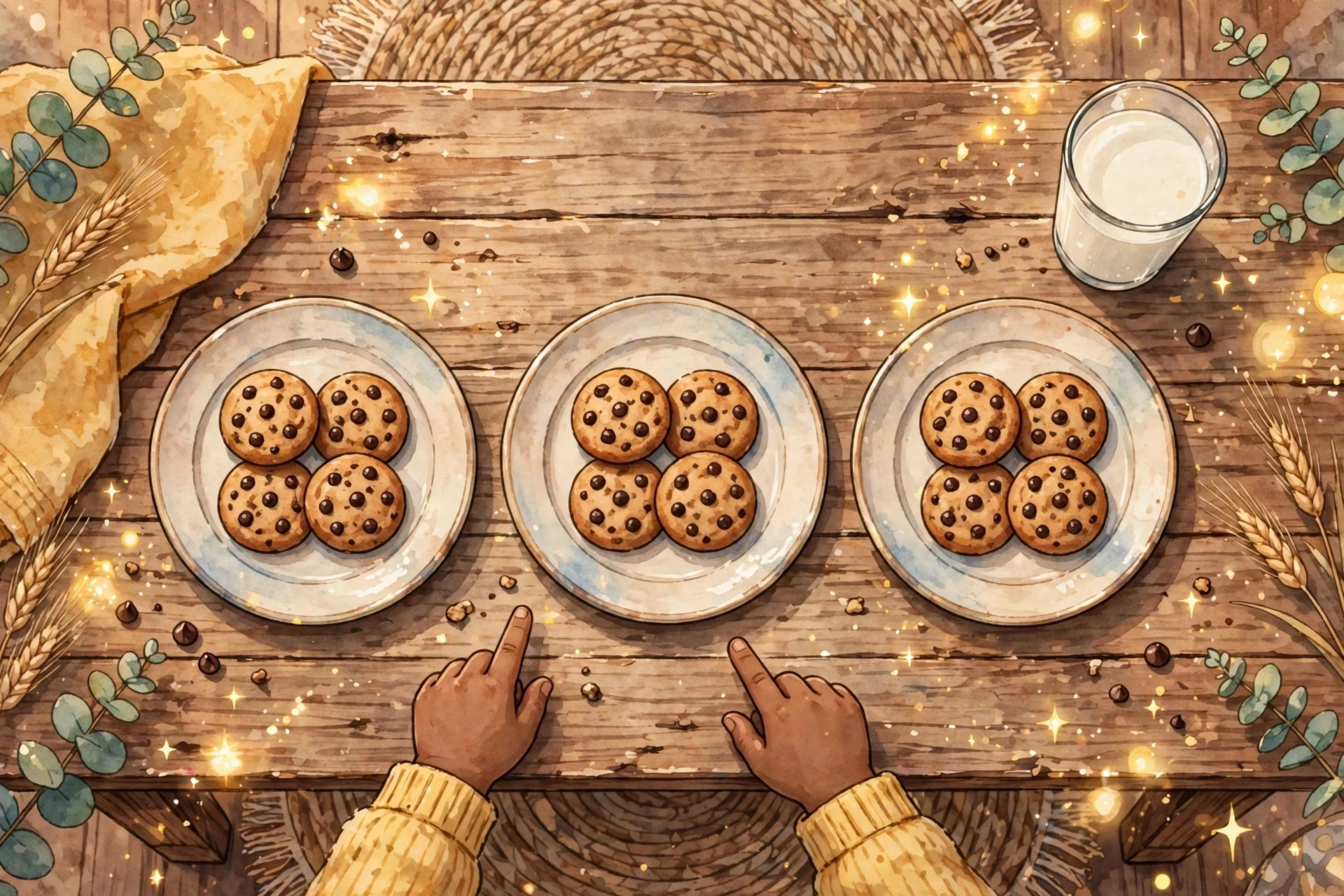
Once they land on 12, point out what just happened: 3 equal groups of 4 came together to make 12. That sentence, said in plain words before any symbol appears, is the entire concept of multiplication.
Repeat this with different objects and different group sizes over several days: toy cars in rows, crayons in cups, stickers on a page. The specific objects matter less than the repetition of the same idea, equal groups combining into a total.
💡 Practical tip: Let your child physically move the objects into groups themselves rather than just looking at a picture. Hands-on grouping builds a much stronger mental model than an illustration alone.
2. Then Arrays
Once equal groups feel natural, arrays add a useful next layer: arranging those same groups into neat rows and columns. A muffin tin is a perfect everyday array, and so is a sheet of stickers laid out in a grid.

Arrays make one of the most useful multiplication ideas visible without any explanation needed: turn a 3 row by 4 column muffin tin a quarter turn, and it becomes 4 rows by 3 columns, with the exact same total either way. That single turn shows a child that 3 times 4 and 4 times 3 are the same fact, not two separate ones to memorize.
This is a genuinely powerful shortcut once it clicks, since it means every fact learned effectively counts twice, once in each direction.
A sheet of stickers works the same way as the muffin tin and is often easier to find around the house. Four rows of five stickers, counted up, gives the same hands-on proof that rows and columns can trade places without changing the total.
💡 Practical tip: Physically rotate the array in front of your child rather than just describing the idea. Watching the rows become columns makes the flipped fact concept click faster than words alone.
3. Then Repeated Addition
Most kids trust addition well before they trust multiplication, which makes repeated addition a natural bridge between the two. Line up 4 toy cars, with 3 passengers in each car, and write it out as 3 plus 3 plus 3 plus 3.
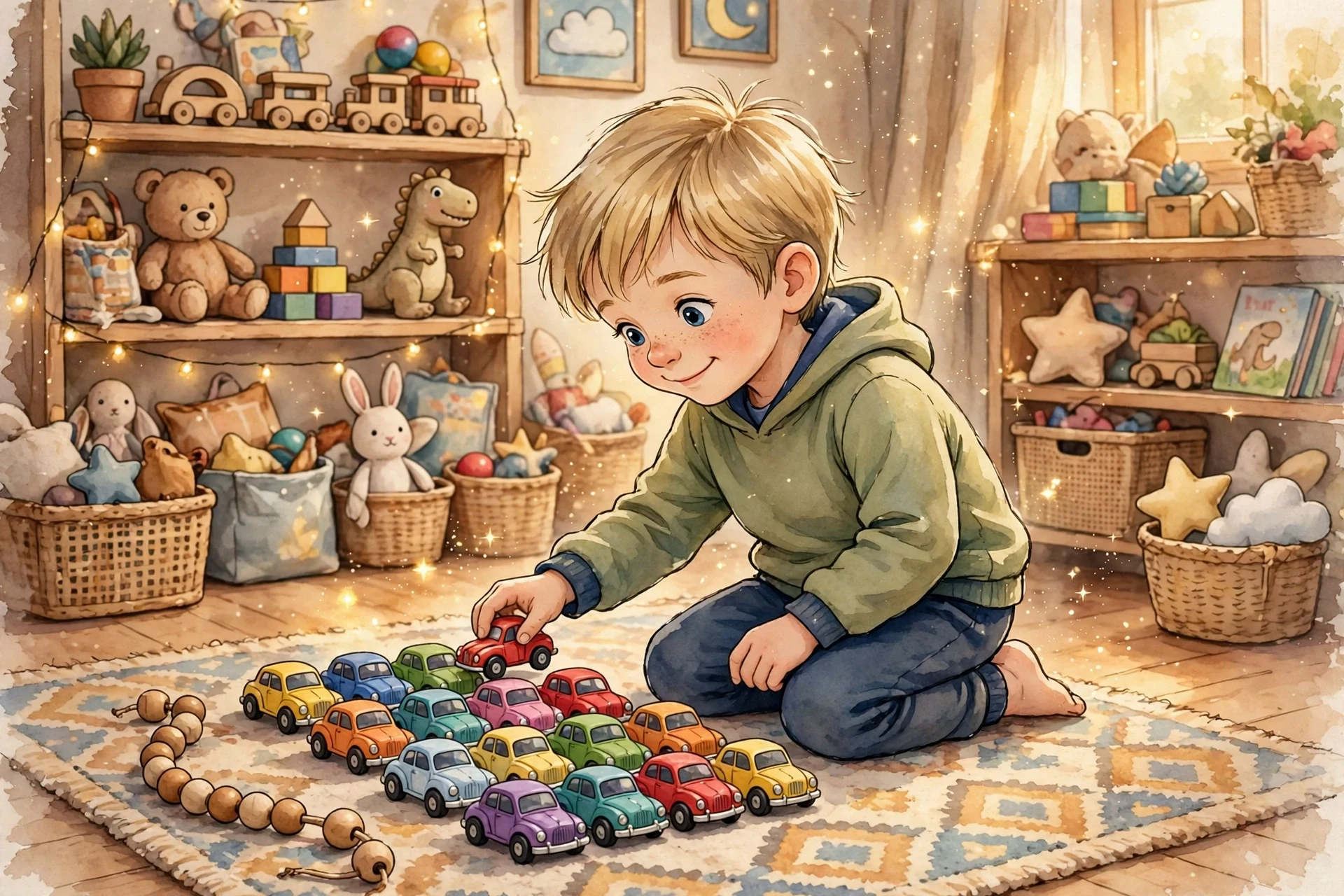
Adding that out gives 12, the exact same total as 4 groups of 3. Showing the connection explicitly, "this long addition and this multiplication fact are the same thing," helps a child see multiplication as a faster version of something they already know, not a brand new, unrelated operation.
This bridge matters most for a child who feels unsure about multiplication specifically. Anchoring it to addition, which already feels safe, lowers the stakes considerably.
It also explains why multiplication gets noticeably faster than addition as numbers grow. Adding 7 seven times takes a while to write out and a while to add correctly, while recalling 7 times 7 as a single stored fact takes almost no time at all once it is learned. That speed payoff is a good thing to point out once a child has made the connection.
💡 Practical tip: Write the repeated addition and the multiplication fact side by side on the same page. Seeing both at once makes the connection obvious in a way that explaining it verbally sometimes does not.
4. Skip Counting as the On-Ramp to the First Tables
Once equal groups, arrays, and repeated addition all feel solid, skip counting is the natural next step toward the first actual times tables. Counting by 2s, 5s, and 10s is really just repeated addition said out loud in a quick rhythm: 2, 4, 6, 8, and so on.
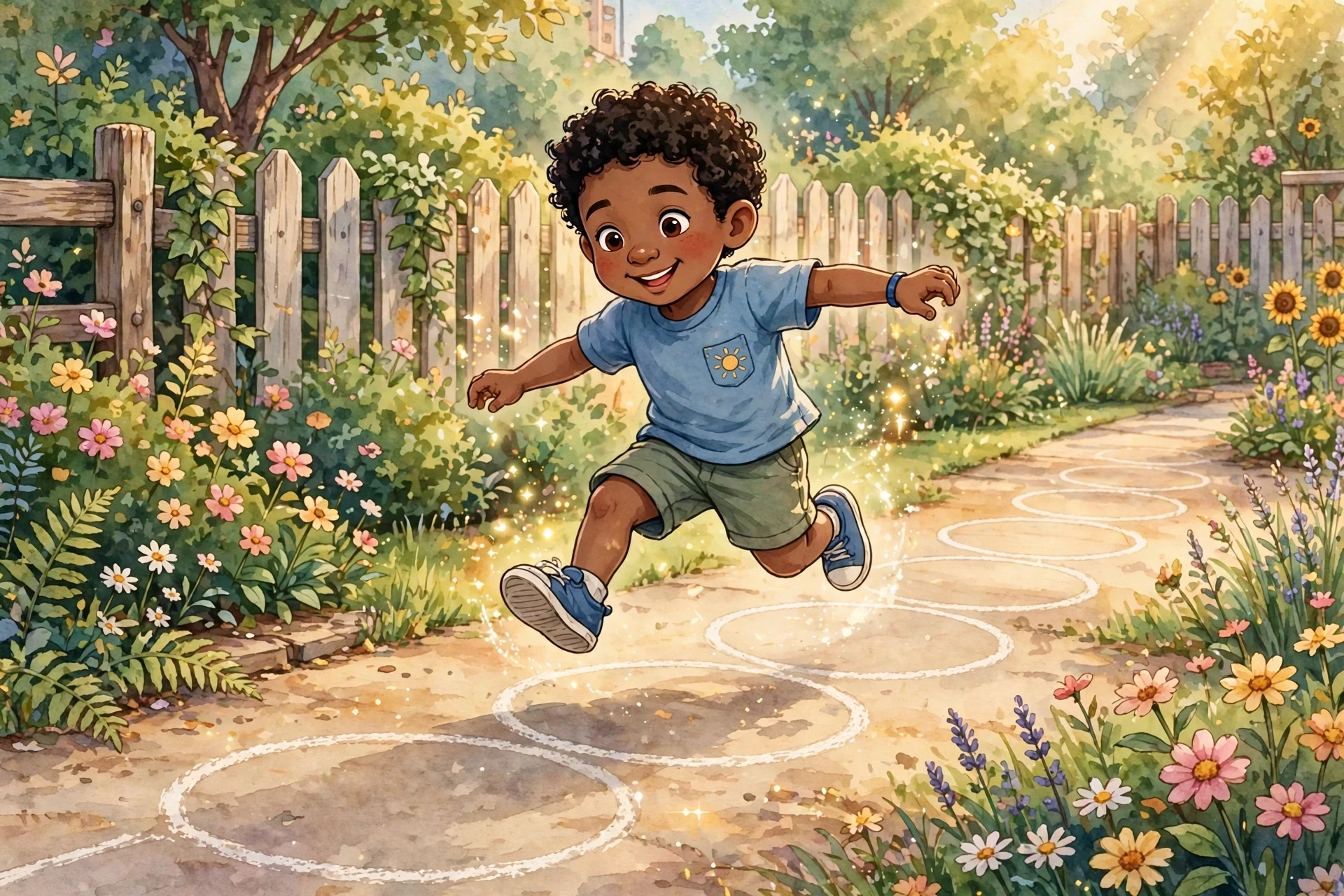
These three tables, 2s, 5s, and 10s, are the recommended starting point on this site precisely because skip counting makes them the most approachable. Our guide on the best order to learn times tables explains why starting here, before the trickier middle tables, builds confidence fastest.
A number line is a great physical tool here: have your child hop along it in equal jumps of 2, 5, or 10, landing exactly on each skip-counted number as they go.
💡 Practical tip: Practice skip counting out loud during everyday moments, like walking up stairs by 2s. Repetition in small, frequent bursts beats a single long sit-down lesson.
5. When to Introduce the Symbol, and What Comes Next
Wait to introduce the times symbol and the word "times" until the equal groups idea is genuinely solid. Once a child can build 3 groups of 4 with real objects and explain what they did in their own words, the symbol becomes a convenient shorthand for something already understood, not a new abstract rule.

The clearest sign the concept has clicked is a child who can build a fact with objects before they can recite it from memory. If they can show you 4 groups of 3 using toys but have not yet memorized that it equals 12, that is exactly the right order, understanding first, speed second.
From there, move into the first easy tables, starting with 2s, 5s, and 10s, and let memorization build naturally on top of a concept that already makes sense. Our guide on how to teach times tables so kids actually remember them long-term picks up exactly where this concept building leaves off.
💡 Practical tip: Celebrate a child explaining a fact in their own words just as much as reciting it correctly. Explanation shows real understanding, which is the foundation everything else builds on.
Common Questions About Explaining Multiplication
What is the best way to explain multiplication to a child for the first time?
Start with equal groups using real objects a child can touch and move, like plates of cookies or toys. Show the groups before ever introducing the times symbol or the word times, so the idea comes first and the notation comes second, once it already makes sense.
What are arrays in multiplication?
An array is a way of arranging equal groups into neat rows and columns, like a muffin tin or a sheet of stickers. Arrays are useful because turning the same array a quarter turn shows that 3 times 4 and 4 times 3 give the same total, which makes flipped facts easy to see rather than just memorize.
How does repeated addition connect to multiplication?
Repeated addition is adding the same number multiple times, like 3 plus 3 plus 3 plus 3, which equals the same total as 4 groups of 3. Since most kids already trust addition, repeated addition works as a bridge that shows multiplication is really just a faster way to add equal groups.
When should I introduce the multiplication symbol and the word times?
Wait until the concept of equal groups is solid before introducing the times symbol. Once a child can build and explain a group of groups using objects, the symbol becomes a convenient shortcut for something they already understand, rather than an abstract new idea to memorize on its own.
Build the Concept, Then the Facts
Everything on the site is free, built for kids ages 6 to 12, and starts right where this guide leaves off.
🚀 Start With Equal GroupsWorks on tablets, computers & phones • No sign-up needed • Everything on the site is free
Understanding First, Memorizing Second
Multiplication clicks fastest when it starts as something a child can see and touch, equal groups of cookies, rows in a muffin tin, cars lined up on a shelf, long before it becomes a symbol on a worksheet.
Build the concept first with real objects, let the symbol follow naturally, and the times tables that come next will sit on top of something your child genuinely understands, not something they are just trying to remember.