

Quick answer: Multiplying by 10, 100 and 1000 moves every digit in a number to the left by one, two or three place values, and a zero fills whatever place is left empty. By 10 it is one place, by 100 it is two places, by 1000 it is three places. The zeros that appear are the result of digits shifting, not a trick added on top of the number.
"Just add a zero" is one of the most common shortcuts kids hear for multiplying by 10, 100 and 1000, and for whole numbers it happens to give the right answer. The trouble is that it teaches the shortcut without the reason behind it, which catches up with a lot of kids once decimals show up later and tacking on a zero suddenly does nothing at all.
The real explanation is place value: every digit in a number physically shifts to a new position when you multiply by a power of ten. Once a child sees that shift happening, with real objects and not just rules, the zeros make sense instead of feeling like a magic trick.
This guide walks through that place value rule step by step, with worked examples your child can check, plus hands-on ways to see it with everyday objects at home.
1. How Do You Multiply by 10? See It With Real Objects First
Before any rule about digits and zeros, it helps for a child to see multiplying by 10 happen with objects they can count. Bundle a pile of craft sticks or pretzel sticks into groups of 10, using a rubber band around each group. Six bundles of 10 is 6 times 10, which is 60, and your child can count the bundles and then count by tens to check it.

This is the same idea behind every multiplication fact your child already knows, just scaled up. Six groups of 10 objects works exactly like six groups of 7 objects, except the answer lines up neatly with place value because 10 is the basis of our whole number system.
💡 Practical tip: Let your child make the bundles themselves rather than handing them a pre-made pile. Physically grouping ten objects at a time builds the place value intuition that a worksheet alone usually cannot.
2. The Place Value Rule, Step by Step
Once the bundles make sense, the rule itself is simple: multiplying by 10 moves every digit one place value to the left, and a zero fills the now-empty ones place. 34 times 10 equals 340. The 3, which was in the tens place, moves to the hundreds place, and the 4, which was in the ones place, moves to the tens place.
The same shift happens with 100 and 1000, just further. 7 times 100 equals 700, since the digit moves two places left. 28 times 100 equals 2800. 5 times 1000 equals 5000, a shift of three places, and 46 times 1000 equals 46000.
It is worth pausing here to make sure the difference between multiplying by 10 and adding 10 is completely clear, since the two are easy to blur together. 34 times 10 equals 340, because every digit shifts a full place value. 34 plus 10 equals only 44, because addition just combines the two numbers without moving anything. The gap between those two answers, 340 versus 44, shows how different the two operations really are.
💡 Practical tip: Write both the multiplication and the addition side by side, like 34 x 10 = 340 next to 34 + 10 = 44, so your child sees in one glance how far apart the two operations land.
3. Why Do We Add Zeros When Multiplying? Is the Shortcut Wrong?
"Just add a zero" is not exactly wrong, it is incomplete. For whole numbers, it gives the correct answer every time, because adding a zero to the end of a whole number happens to produce the same result as shifting every digit one place to the left. The shortcut works, but it works as a side effect of place value, not as the actual reason.

The gap in the shortcut shows up once decimals enter the picture, which usually happens a year or two after multiplying by 10 is first introduced. Tacking a zero onto the end of 3.4 does nothing mathematically, while the place value rule still works perfectly: every digit still shifts one place, and 3.4 times 10 is 34.
It is fine for your child to use "add a zero" as a fast shortcut once they understand why it works for whole numbers. The goal is simply to make sure the place value reasoning comes first, so the shortcut has something solid underneath it rather than being the whole explanation.
💡 Practical tip: Ask your child to explain why the shortcut works, not just that it works. If they can describe the digits shifting, the shortcut is built on solid ground instead of memorized blindly.
4. The x10, x100 and x1000 Staircase
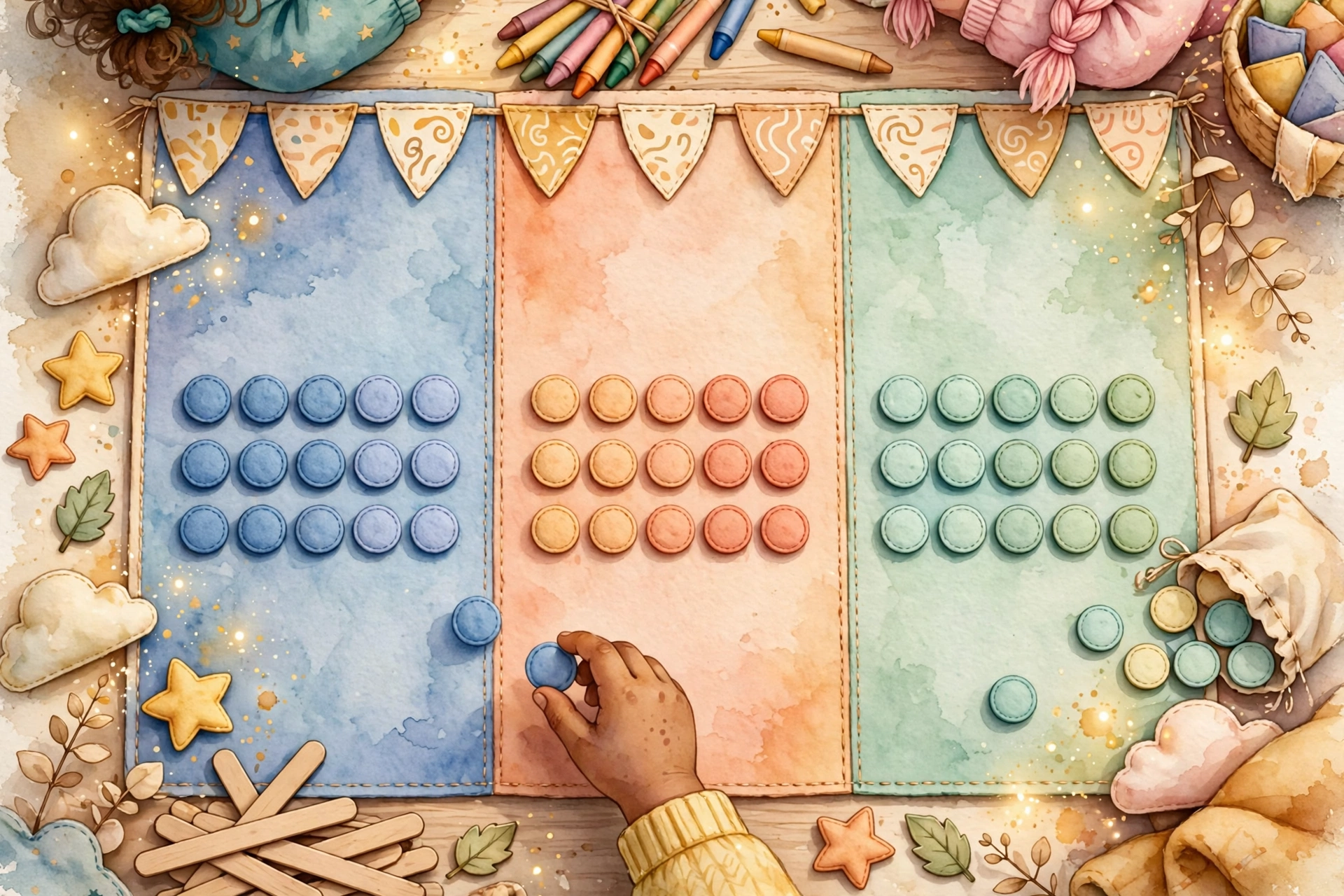
A 10 by 10 grid of counters or buttons is a useful next step after the bundles of 10, since it shows 100 as ten groups of ten in one visual. Multiplying by 100 is the same place value shift as multiplying by 10, just done twice in a row, which is why the digits move two places instead of one.

It helps to connect the three operations as one staircase rather than three separate rules. Multiplying by 10 once moves a digit one step. Multiplying by 10 twice, which is the same as multiplying by 100, moves it two steps. Multiplying by 10 three times, which is the same as multiplying by 1000, moves it three steps. Each step up the staircase is just one more place value shift.
Once the staircase idea clicks, 100 and 1000 stop feeling like brand new rules and start feeling like the same move, repeated. Our guide on the best order to learn times tables covers a similar idea: newer facts tend to click faster when they are connected to something a child already understands.
💡 Practical tip: Ask your child to predict the next step before you show it. If 10 bundles of 10 made 100, what would 10 of those 100-grids make? Letting them guess 1000 first makes the pattern land harder.
5. Quick Ways to Practice at Home
Money is one of the easiest everyday ways to practice this rule, since prices and coin values are already built on tens. Ask how much 10 stickers cost if one sticker costs 10 cents. Ten times ten cents is 100 cents, or one dollar, which your child can count out with real coins.

Counting unopened packets that come in tens, like a box of 10 crayons or a pack of 10 pencils, works the same way. If there are 12 packets, that is 12 times 10, which is 120 items, and your child can check the shift by counting the packets and then counting by tens.
Our printable multiplication chart is also a handy reference while practicing this rule, since the 10s row makes the place value pattern easy to see in one place, right next to the facts your child is already working on.
Once the 2s, 5s and 10s feel easy thanks to this kind of pattern, the rest of the chart still needs its own attention. Our guide to the hardest times tables facts covers the handful of facts, like 6x7 and 7x8, that do not have a shortcut like this one and need a different strategy to stick.
💡 Practical tip: Keep practice sessions short and concrete. A handful of real coins or packets beats a worksheet of abstract numbers for building the place value sense this rule depends on.
Common Questions About Multiplying by 10, 100 and 1000
How do you multiply by 10, 100 and 1000?
Multiplying by 10 moves every digit in the number one place value to the left, and a zero fills the empty ones place. Multiplying by 100 moves every digit two places to the left, and multiplying by 1000 moves every digit three places to the left, with zeros filling whatever places are left empty.
Why do we add zeros when multiplying by 10?
The zero is not added on its own, it appears because every digit shifts one place value to the left, which leaves the ones place empty. A zero is placed there to show that spot is empty, which is why it looks like a zero was added even though the real action is digits moving places.
What is the rule for multiplying by 1000?
Multiplying by 1000 moves every digit three place values to the left: ones become thousands, tens become ten thousands, and so on, with three zeros filling the empty places. For example, 46 times 1000 equals 46000, since the 4 and 6 each shift three places left.
Is multiplying by 10 the same as adding 10?
No, multiplying by 10 and adding 10 give very different results once the number is more than a single digit. 34 times 10 equals 340, since every digit shifts one place value, while 34 plus 10 equals only 44. The two operations only look similar for the smallest numbers.
Build Place Value Sense Alongside the Facts
Everything on the site is free, including the color-coded learning grid and printable charts.
🚀 Start Practicing NowWorks on tablets, computers & phones • No sign-up needed • Everything on the site is free
A Rule That Still Works Later
Multiplying by 10, 100 and 1000 comes down to one idea: digits shift places, and zeros fill whatever is left empty. "Just add a zero" works for whole numbers, but the place value reasoning underneath it is what keeps working once decimals and bigger numbers show up later on.
A few sessions with bundles of ten, a hundred grid, and some real coins usually make the rule click far better than a worksheet of rules alone.