
Quick answer: These 12 screen-free multiplication games use cards, dice, chalk, and simple homemade materials to build times table fluency through play. They are grouped into five categories: card games, dice games, memory match style games, active outdoor games, and family game night favorites like bingo, so there is something for a rainy afternoon or a backyard evening.
Not every multiplication practice session needs a tablet. Some of the most effective repetition happens around a kitchen table with a deck of cards, or outside with a piece of sidewalk chalk. Games like these turn the same facts your child is drilling on a worksheet into something they will actually ask to play again.
Below are 12 screen-free multiplication games, organized by type, with quick instructions for each one so you can start playing in the next five minutes.
Most of these use items you already have at home. A few take a little prep, like writing out homemade cards, but none require anything you would need to buy.
1. Multiplication Card Games (No Special Deck Needed)
A regular deck of playing cards is one of the most flexible multiplication games tools you already own. Aces count as 1 and face cards can be removed or set to 10, depending on the age and level of your child. All three games below use the exact same deck, just with slightly different rules.
Game 1: Multiplication War
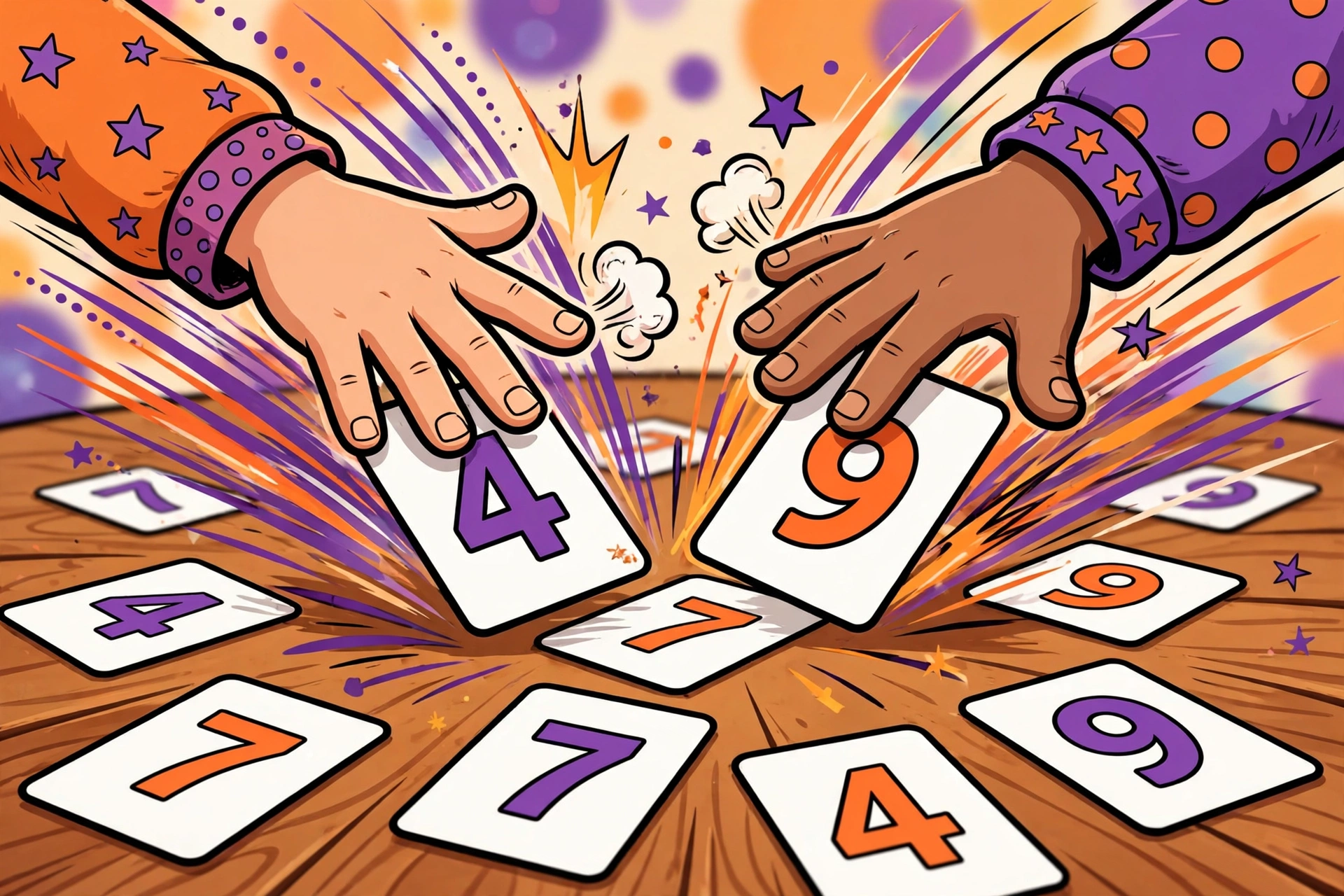
Split the deck evenly between two players. Each player flips one card at the same time and multiplies the two numbers together out loud. Fastest correct answer wins both cards. Whoever collects the most cards after going through the deck wins.
Game 2: Multiplication Go Fish
Deal 5 cards to each player. Instead of asking for matching numbers, players ask for a card that multiplies with one in their hand to reach a target number you set beforehand, like 24 or 36. Collecting a matching pair scores a point.
Game 3: Flip and Multiply
Flip two cards from the deck as fast as possible and call out the product before your opponent. This fast-paced version works well for kids who already know most of their facts and want to build speed rather than relearn basics.
💡 Practical tip: Remove face cards and start with cards 1 through 6 for younger players, then add higher cards as facts become automatic.
2. Dice Games for Quick Daily Practice
Two standard six-sided dice are all you need for a surprising amount of multiplication practice. These games are fast to set up and work well as a five-minute warm-up before homework, which is especially handy once multiplication first shows up in 3rd grade math class.
Game 4: Roll and Solve
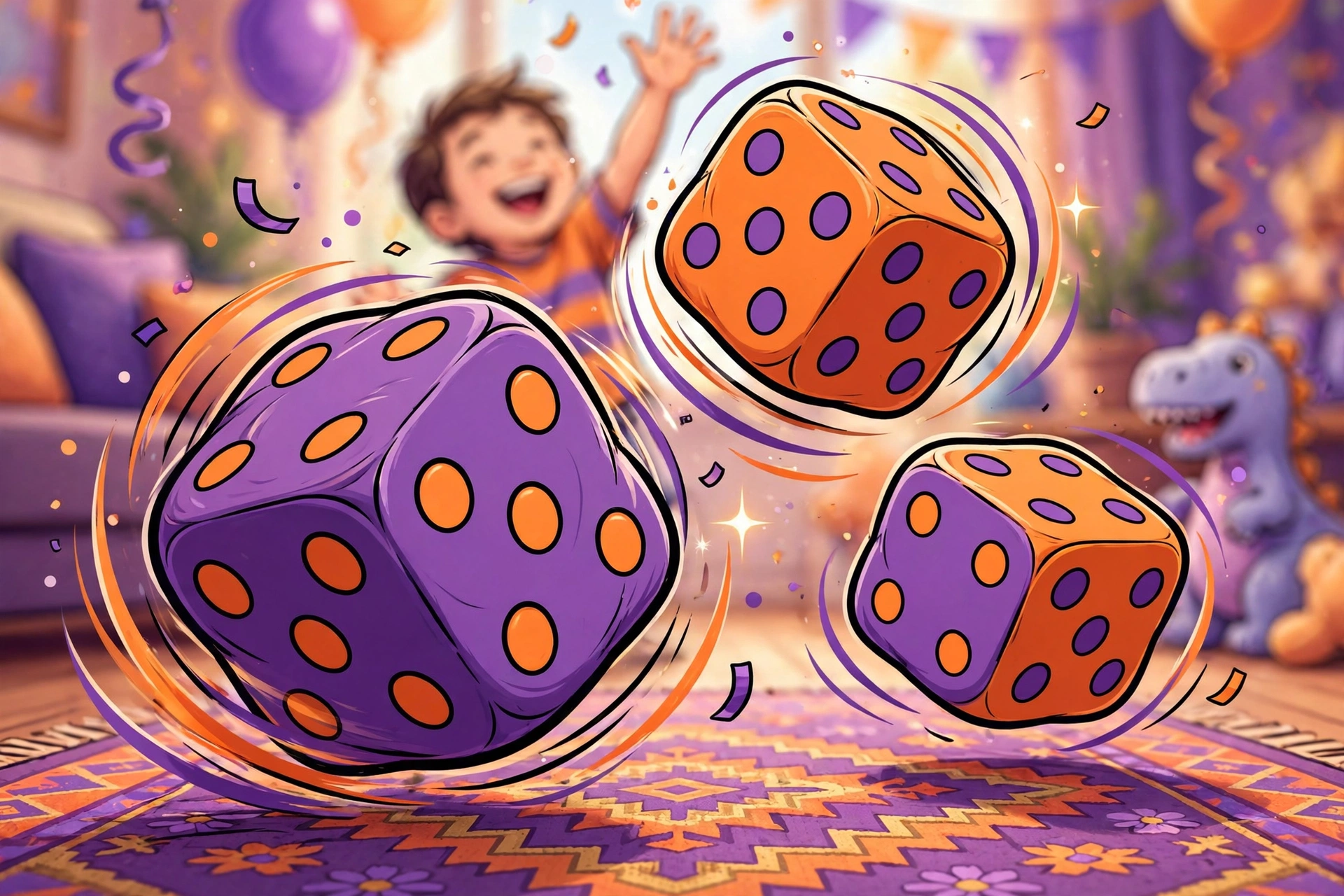
Roll both dice and multiply the two numbers shown. Keep a running tally of correct answers in a row. Beating a previous streak becomes the goal instead of a fixed worksheet.
Game 5: Dice Race to 100
Each player rolls both dice, multiplies, and adds the product to their running total. First player to reach exactly 100, or closest without going over after an agreed number of rounds, wins. Since both dice only go up to 6, this game is also a focused way to drill the 6 times table specifically.
💡 Practical tip: Use one die that goes up to 6 and a 10-sided die (or a printed 1 to 12 spinner) once your child is ready to practice the harder tables like the 7s and 8s.
3. Memory Match Games
Matching games combine memory skills with fact recall, and they work equally well online or with homemade paper cards.
Game 6: Our Free Memory Match Game
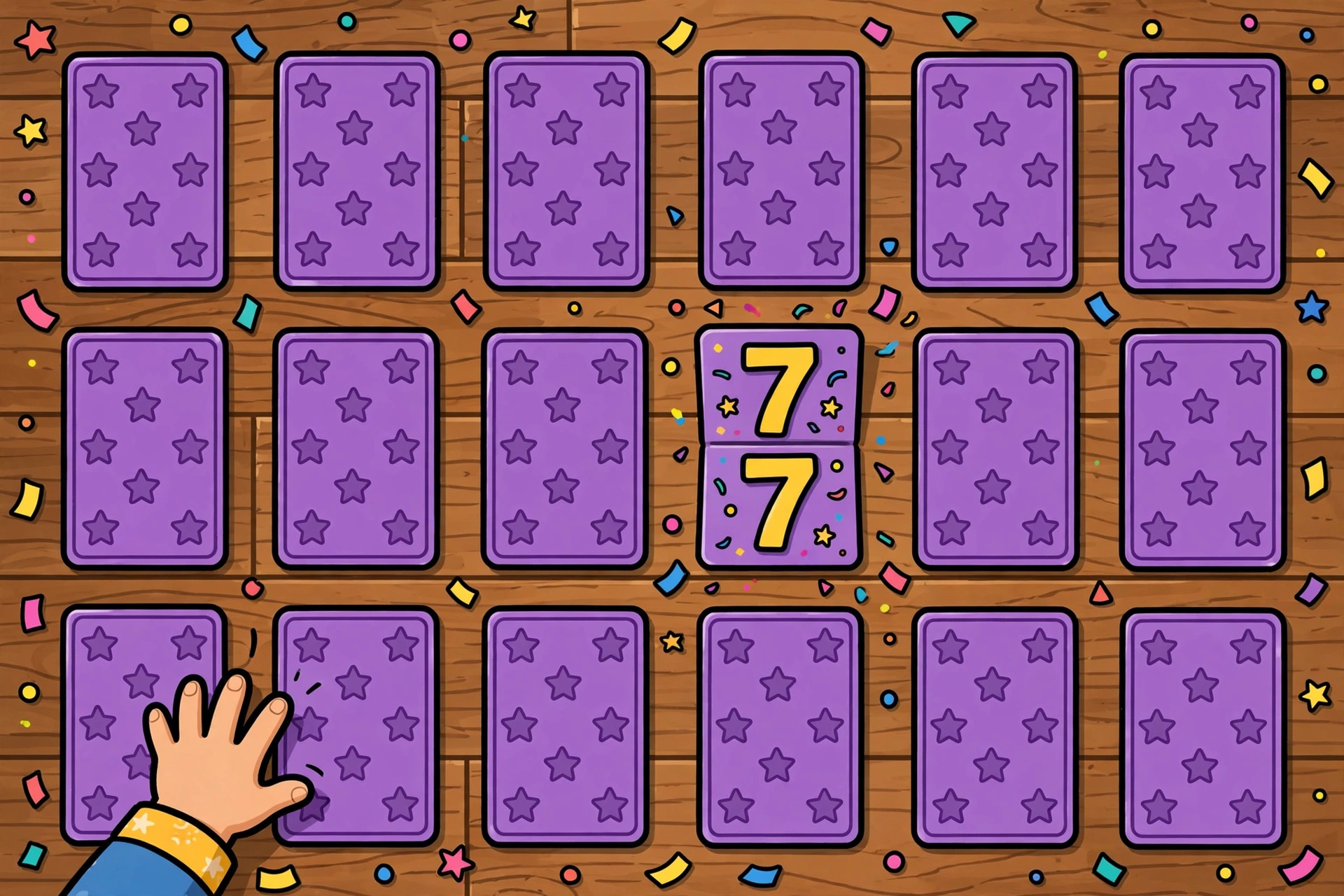
Our free Memory Match game pairs multiplication problems with their answers in a flip-and-match format. It is a great screen-based option to rotate alongside the screen-free games on this list.
Game 7: DIY Paper Memory Match
Write 12 multiplication problems on index cards and their answers on 12 more. Shuffle and lay all 24 face down in a grid. Players take turns flipping two cards, trying to match a problem with its correct answer. This version doubles as a craft activity if your child enjoys decorating their own cards.
💡 Practical tip: Keep the DIY deck small, around 10 to 12 pairs, so a round stays short enough to hold attention through to the end.
4. Active Outdoor Games
For kids who focus better while moving, these games get multiplication practice outside and off the couch entirely.

Game 8: Multiplication Hopscotch
Draw a hopscotch grid with chalk, but instead of numbers 1 through 10, write multiplication problems in each square. Your child calls out the answer as they hop onto each one.
Game 9: Multiplication Tag
Whoever is "it" calls out a multiplication problem before chasing. The player being tagged has to shout the correct answer before being caught to stay safe for that round.
Game 10: Sidewalk Chalk Grid Race
Draw a large multiplication grid on the driveway with chalk. Call out a problem and have your child race to stand on the correct answer square. Great for practicing a single table, like the 7 times table, in a low-pressure, high-energy way.
💡 Practical tip: These outdoor games work especially well for kids who struggle to sit still for traditional practice. Movement can make recall feel effortless instead of forced, which is also the idea behind our guide to helping kids with ADHD master times tables.
5. Family Game Night Favorites
These two games work well with the whole family or a small group of friends, turning practice into a shared evening activity instead of a solo chore.
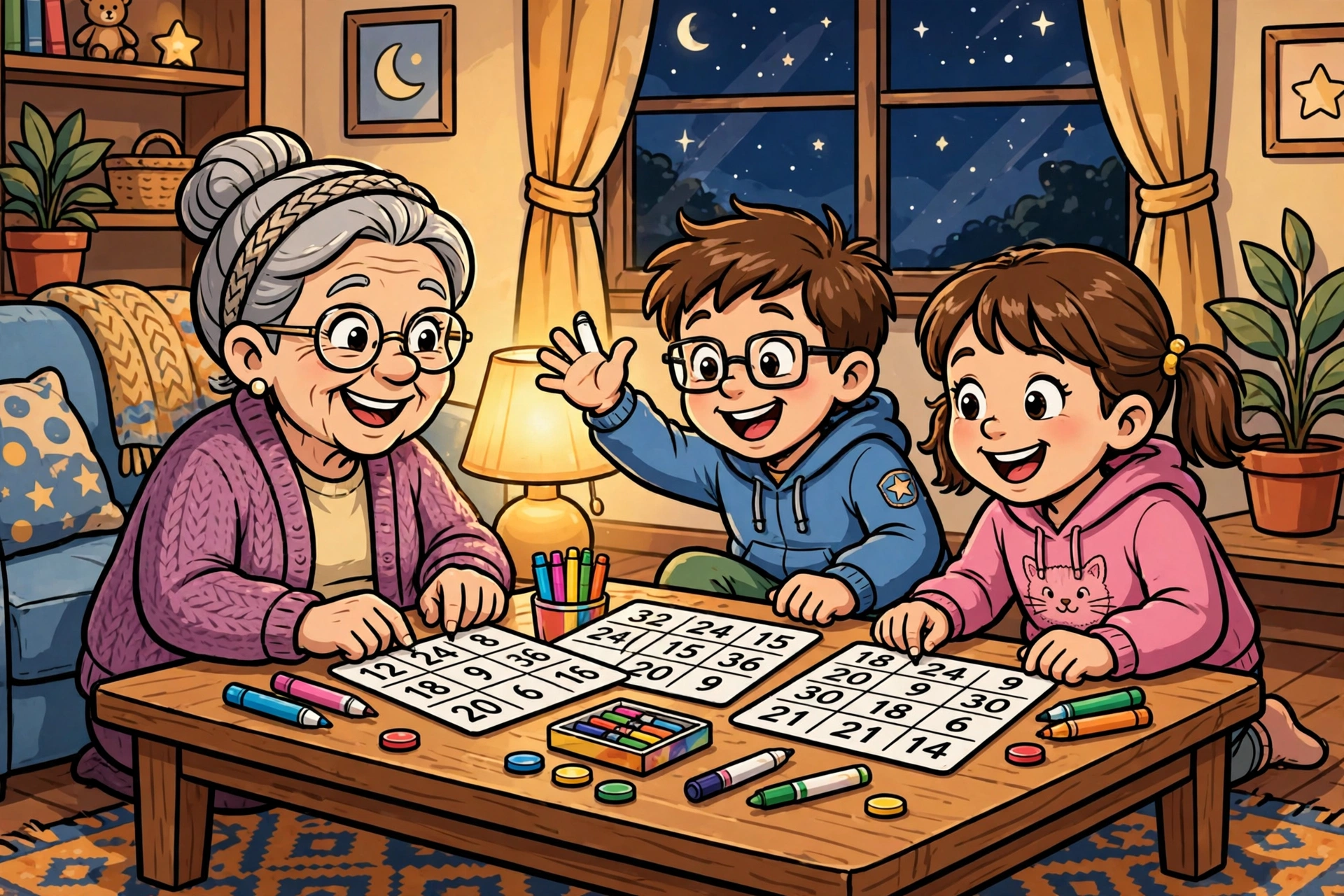
Game 11: Multiplication Bingo
Fill a blank bingo grid with answers (products) instead of random numbers. Call out multiplication problems one at a time; players mark the matching product on their card. First to five in a row calls bingo.
Game 12: Around the World
Two players stand, one calls out a problem, and whoever answers first moves on to challenge the next player in the circle. The goal is to make it all the way "around the world" without losing a round, a classic classroom game that works just as well with siblings or cousins at home.
💡 Practical tip: Rotate who calls out the problems. Reading and checking the answers reinforces the facts almost as much as answering them does.
Common Questions About Multiplication Games
How do I pick the right game for my child's level?
Start with card or dice games using only the numbers 1 through 6 if your child is still learning the easier tables. Move to full decks and 12-sided options once facts like the 7s and 8s are in progress.
Can these games replace regular multiplication practice?
Games work best as a supplement to focused practice, not a full replacement. Pairing a quick game with a short session on our practice quizzes covers both the fun and the structured repetition kids need. For more ways to lock in facts between games, see our guide on how to memorize times tables fast.
What if my child loses interest partway through a game?
Keep rounds short, five to ten minutes at most, and stop while it is still fun rather than pushing to finish. Ending on a high note makes a child more likely to want to play again tomorrow.
Mix in Our Free Online Games Too
Everything on the site is free, including Memory Match and the rest of our multiplication games.
🚀 Play Free Games NowWorks on tablets, computers & phones • No sign-up needed • Everything on the site is free
Play Is Still Practice
These 12 screen-free multiplication games prove that fact practice does not have to feel like a worksheet. A deck of cards, two dice, or a piece of sidewalk chalk can deliver the same repetition as a drill sheet, just wrapped in something your child actually wants to do again.
Pick one game that matches your child's energy level today, whether that is a quiet card game at the table or an active round of multiplication tag outside, and start there.
Keep a couple of these in rotation so practice never feels stale, and let your child help pick which one to play next.